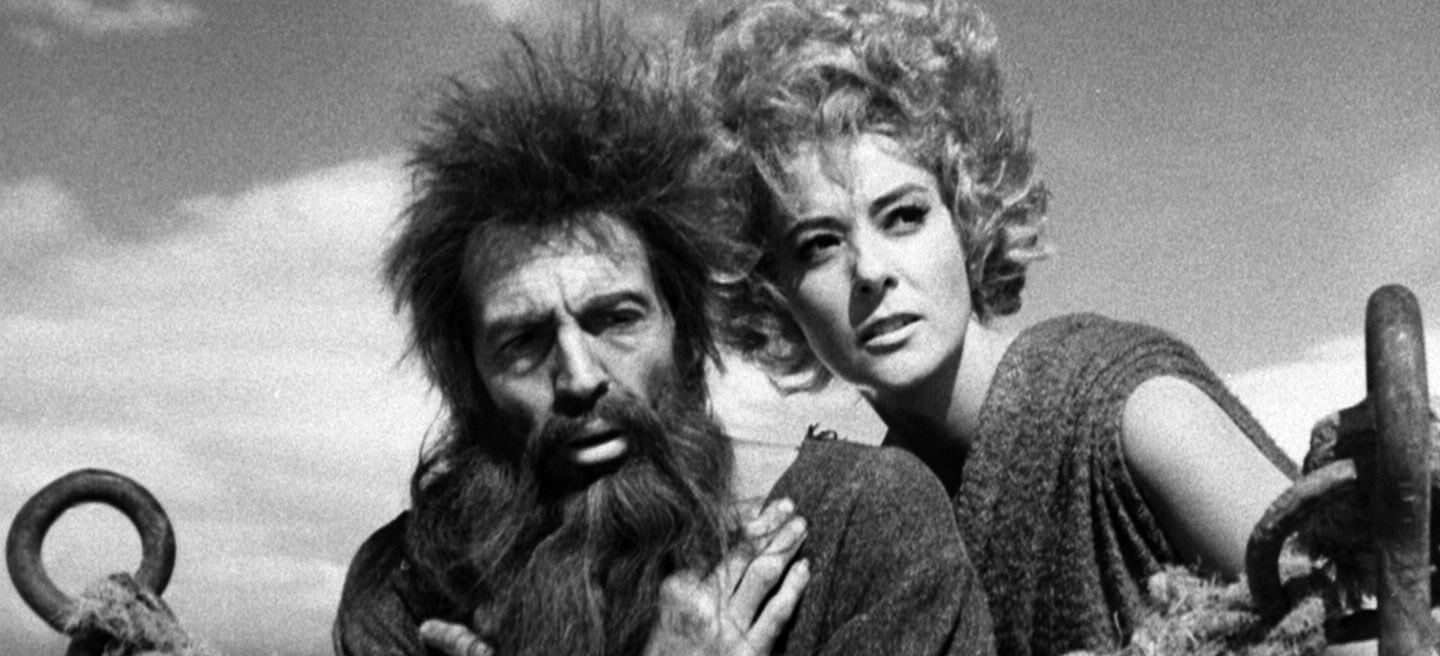
Made after Illusion Travels by Streetcar, The River and Death may be the closest thing to a contract job in Luis Buñuel’s career. Miguel Álvarez Acosta, author of the novel from which the film was adapted, insisted that Buñuel respect his condescending thesis conflating education and crime. Case in point is a line delivered late in the film by one man to another: “If all men went to university we would have less crime.” Buñuel, who would later call Acosta’s argument absurd in My Last Sigh (the director wasn’t known for wearing his themes on his sleeve), allowed himself to be strong-armed by his producer, and it shows.
The River and Death is about the sensation of Latin American violence, pieced together from a number of vendettas that plague a coastal town. Buñuel’s best films often implicate nature and social institutions in the degradation of human life, but River and Death is scattershot; the director’s pot shots at religion and government are both scarce and toothless, and there’s little complicity evoked between the town’s river and the local bureaucracy.
Over and over again, men are killed for the smallest mistakes and infractions. It’s an absurdity that certainly intrigues Buñuel, but it’s not one that’s intelligently plumbed. Every vengeful scenario is only vaguely different from the next, and as such the film quickly wears thin. Book-ending the endless string of murders and dramatic funerals is a confrontation between a low-life and an educated man, linked to each other by their fathers’ deaths. The cultivated man condescends to the uneducated man’s barbarian thirst for blood, mocking his honor and machismo before daring him to shoot him in the back. For a director who made a career of putting bourgeois ghouls in their place, it’s a pity the lower classman doesn’t pull the trigger.
Since 2001, we've brought you uncompromising, candid takes on the world of film, music, television, video games, theater, and more. Independently owned and operated publications like Slant have been hit hard in recent years, but we’re committed to keeping our content free and accessible—meaning no paywalls or fees.
If you like what we do, please consider subscribing to our Patreon or making a donation.